We’ve just released a fresh round of improvements to make your research flow smoother, smarter, and a little more delightful. ✨
From multilingual reporting to a cleaner, more intuitive interface, these updates are designed to save you time and give you more control.
Here’s what’s new:
1. Codebooks & reports in multiple languages
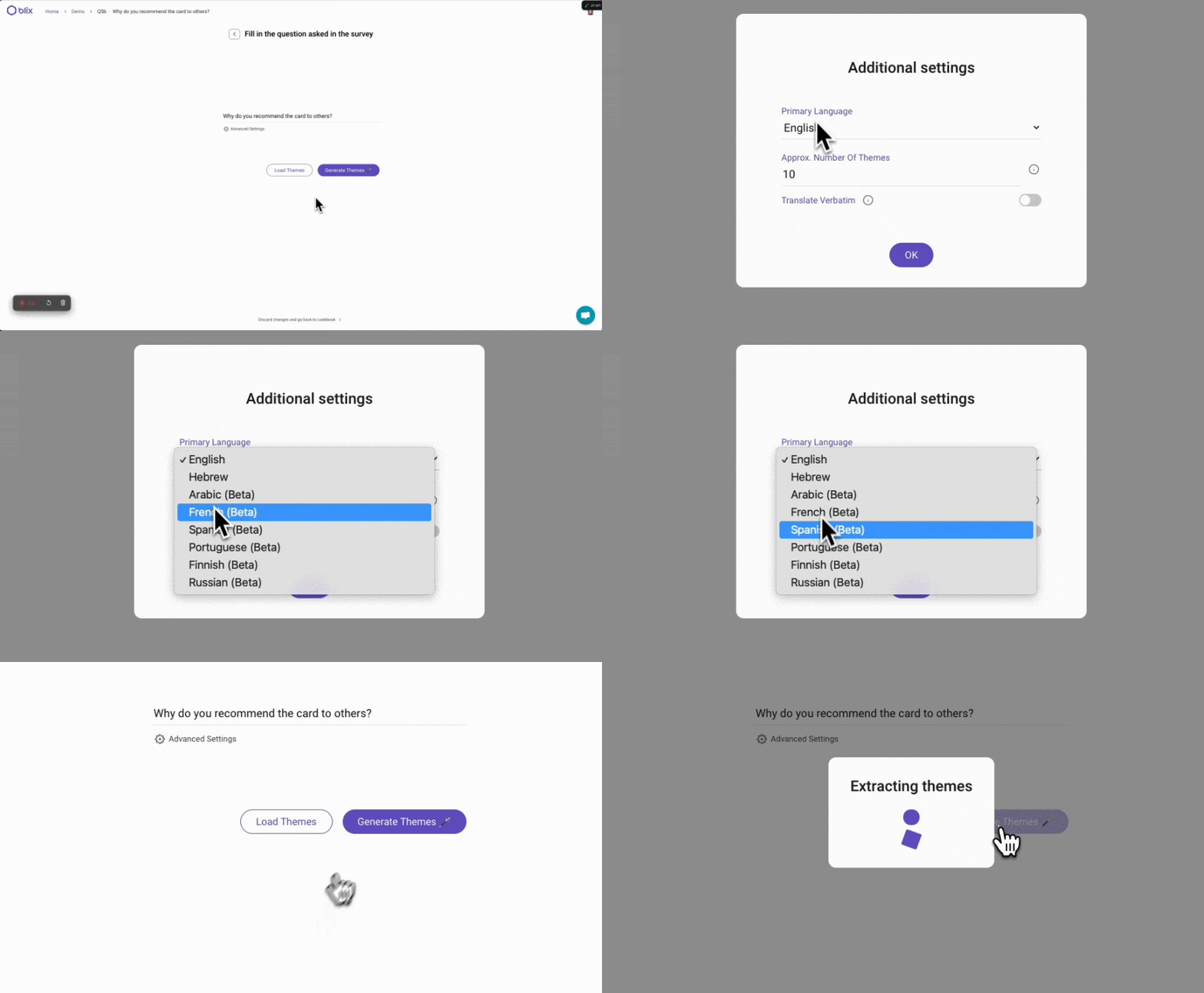
Blix can now generate codebooks, reports and translations in more languages, including: Arabic, French, Spanish, Portuguese, Finnish, Russian - and more are on the way.
Choose your preferred language in the settings and let Blix do the rest.
2. Quick coding refinement & review
Need to fix a few codes after the analysis is done? Now you can manually adjust codes directly from the final report screen.
Your edits will instantly update the report and exported Excel file, giving you full control, faster.
.gif)
3. Updated user interface
We’ve refreshed the design to make Blix even easier to use. can you spot the changes?
4. “Don’t Know” Theme
Responses that express uncertainty or confusion - like “not sure” or “don’t know” - will now be automatically categorized under a dedicated “Don’t Know” theme (in your selected language).
Less clean-up will be required.
About Blix
Blix is an AI-powered platform that helps market research and insights teams analyze open-ended survey responses, customer reviews, and other textual feedback at scale.Researchers use Blix to automate verbatim coding, perform sentiment analysis, and extract meaningful insights from qualitative data, all within minutes.
Built for speed, accuracy, and ease of use, Blix makes it simple to integrate open-ended feedback into quantitative analysis, no manual coding or data wrangling required.