TL;DR: Improving your NPS means closing the loop fast, getting every team in your company invested in the outcome, and understanding the root cause behind your responses. AI feedback analysis tools like Blix make the analysis side significantly faster.
Think about the last time you had a genuinely great experience with a business; maybe a support rep quickly solved your problem, or an app worked exactly the way you needed it to. Chances are, you told someone about it.
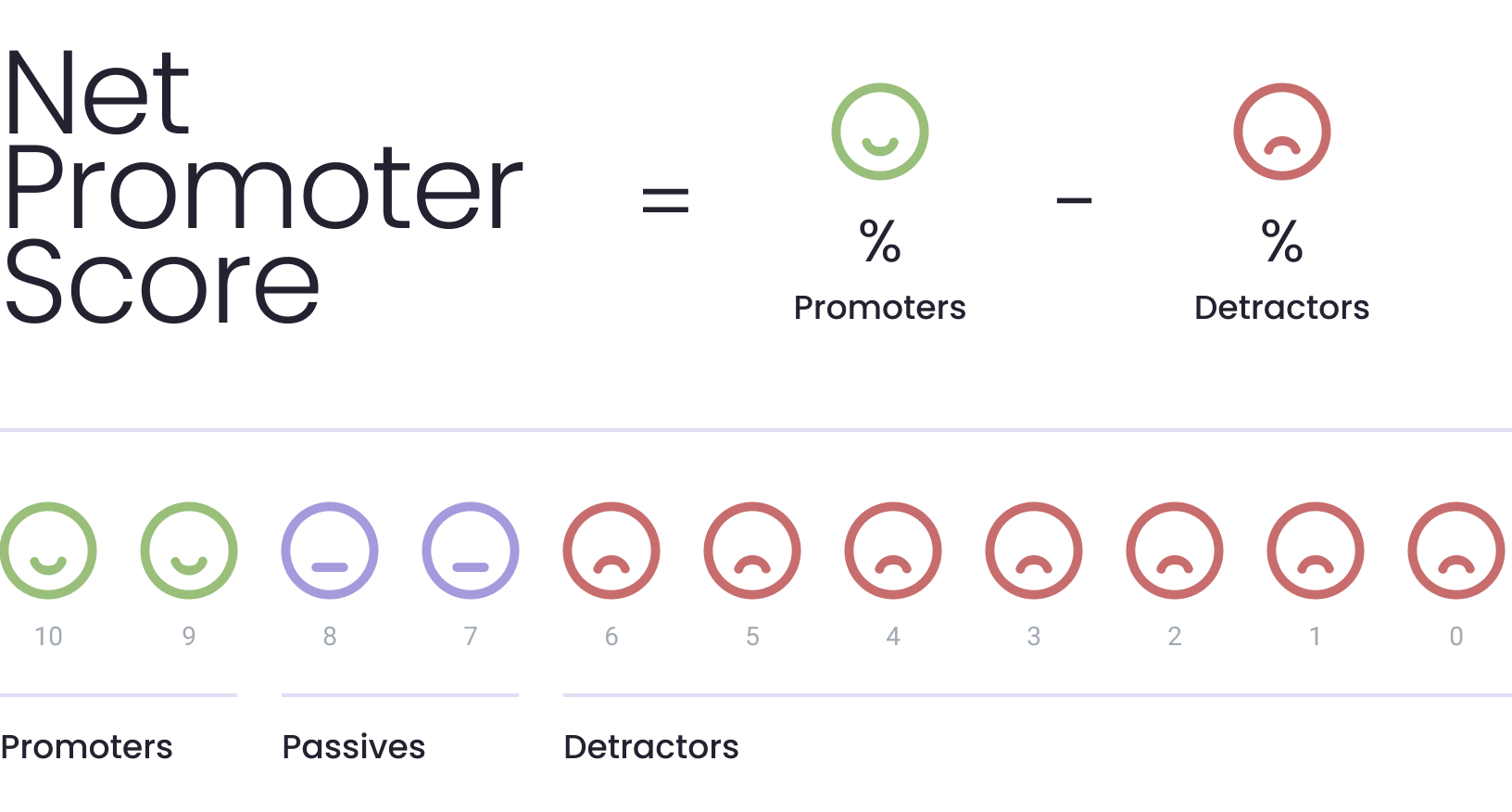
That word-of-mouth moment is exactly what your Net Promoter Score (NPS) tries to measure: on a scale of 0 to 10, how likely are your customers to recommend you to a friend? The number reflects customer loyalty, flags retention risk, and shows where your experience is breaking down.
Now, a lot of companies collect their NPS and stop there. But the score itself won't fix anything; what promotes change is what you do with that score. Improving your NPS:
- Turns unhappy customers into loyal ones
- Cuts churn before it happens
- Drives referrals and organic growth
In this guide, we'll walk you through practical ways to do exactly that, plus a look at where AI fits in.
Why Improving NPS Is Hard
Improving NPS is not just about raising the number. To actually move the needle and create the impact you are looking for, you need to improve the product, service, and customer experience behind the score.
In practice, a few things get in the way:
- The score doesn't explain itself: Even when a customer gives you a 6, teams don’t always know what that means or what they should do about it.
- No one owns it: Companies often hand NPS to one department, like support, even when the issues behind the score span product, operations, sales, onboarding, and customer success.
- Teams chase the score itself: Optimizing for a 9 or 10 is not always the same as creating a better customer experience.
As Kelly Jura, CXO at Qwoted, puts it:
Companies will track the number very closely and lose sight of the experience as a whole. They’ll try to optimize when and how they ask for their NPS survey, creating some level of bias, chasing that 9 or 10 rating, rather than trying to create a better experience.
The biggest challenge, though, is that the score alone never explains the "why" behind the rating. A number tells you something went wrong. It doesn't tell you what (which is exactly where root analysis comes in, which we’ll get into shortly).
How to Improve Your NPS Score
1. Close the Loop Fast
When a customer flags an issue, the window to save that relationship is short. Acknowledge the specific issue they raised, and have the customer's account manager handle the follow-up, not just support. Acting on customer feedback can increase retention rates by 14%, and ultimately turn an unhappy customer into one who stays and recommends you.
2. Don't Ignore Passives
Passives are satisfied, but not loyal. Unfortunately, they're one good competitor offer away from leaving without a word. The goal is to convert them to promoters, so take their comments seriously too.
A passive user might leave a comment like: "The product works well, but onboarding took longer than expected."
Look at comments like these as an invitation to do better. A good response acknowledges the friction directly: "Thanks for sharing that. We're working on making onboarding faster and would love to hear more about your experience." This follow-up shows you're listening, and it's often enough to shift someone from a 7 to a 9.
3. Get the Whole Company Behind It
NPS improvement fails when it lives only in customer success or support. Every department affects the score:
- Product
- Sales
- Consumer insights
- Support
Share open-text feedback with every team, not just the ones who talk to customers. If onboarding complaints keep coming up, give the onboarding team a target to bring them down. Fixing issues at the source has a direct impact on customer satisfaction, and satisfied customers are far more likely to recommend you.
4. Do Root Cause Analysis on Recurring Complaints
The NPS number tells you something is wrong, but it doesn't tell you what. That's why an open-text follow-up question should always accompany your survey. These include questions like:
- What's the primary reason for your score?
- Is there anything specific we could do better?
- How satisfied were you with the quality of our product?
Once you have that feedback, group responses into themes and prioritize by frequency. If 40 customers mention slow onboarding and three mention a billing issue, you know where to start.
Doing this by hand means reading every comment one by one, which quickly becomes difficult as response volume grows.
In our experience working with research and insights teams at Blix, this is one of the main reasons teams end up ignoring open-ended feedback, even when they already collected it.
The answers to how you can improve your NPS are there. Many teams just do not have the time to read, code, and analyze every response properly.
That is why many researchers and insights teams use text analysis tools: not to replace the thinking, but to make sure the feedback actually gets analyzed and turned into something the business can use.
Your next NPS improvement starts with better analysis. Turn open-ended survey responses into action in minutes.
How AI and Text Analytics Can Speed Up Root Cause Analysis
As Elaine Buxton, President & CEO of Confero, shares:
AI and machine learning have made it much easier to analyze NPS data at scale. When NPS data is paired with direct observation of the customer experience, it becomes far more actionable and helps teams address root causes rather than symptoms.
Tools like Blix automatically categorize responses by theme, making root cause analysis practical at any volume.
So, how does this help you improve your NPS?
Let’s walk through an example. Say you’re an online retailer and you've got 500 responses from an open-text question you added to your NPS survey (something like, "Is there anything about your experience we could improve?").
Upload the responses to Blix, and within minutes you have a summary page showing your customer feedback grouped into clear themes:
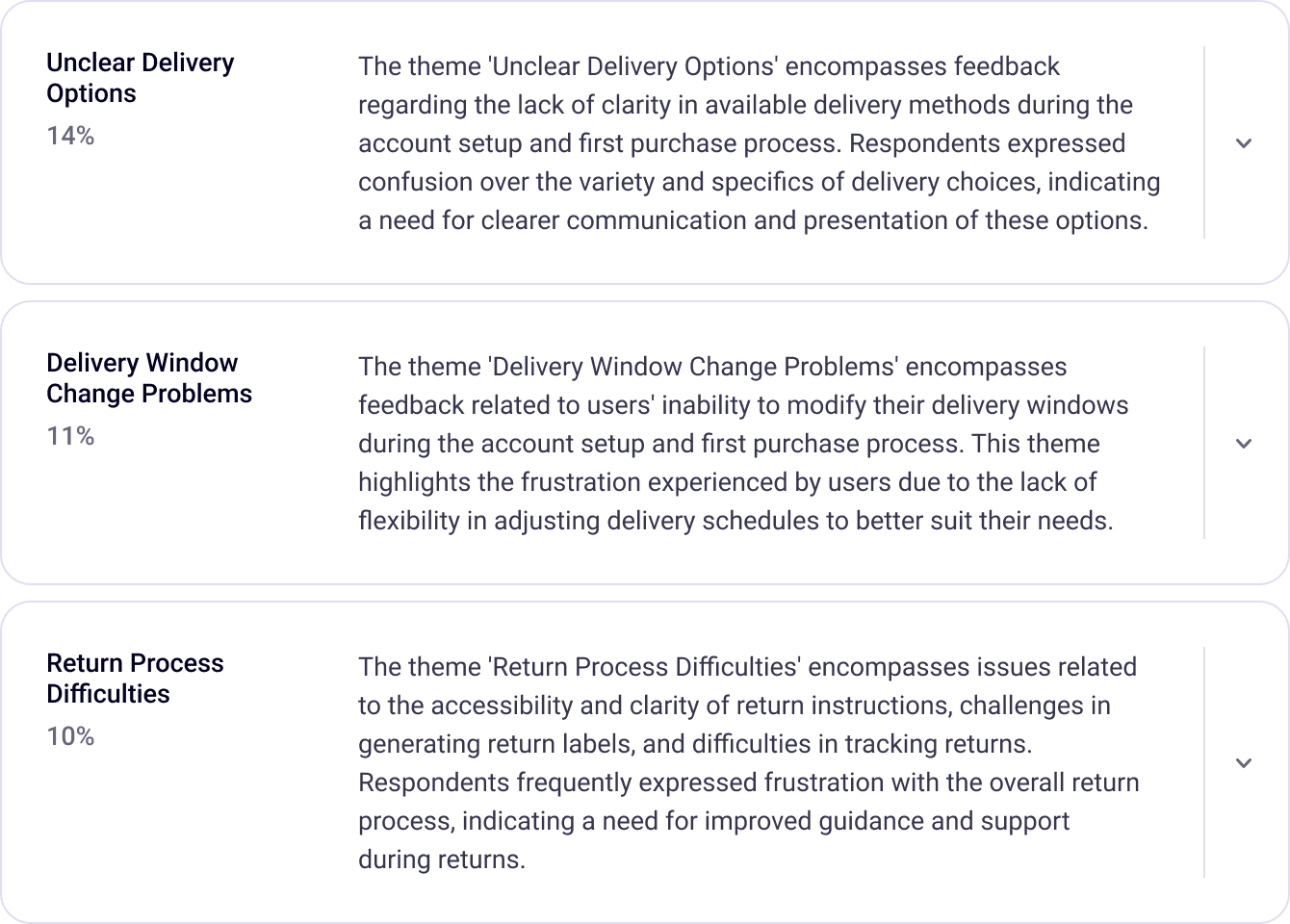
In this example, it shows 14% of customers mention unclear delivery options, 11% can't change their delivery windows, and 10% are struggling with returns.
Now you know exactly why your score could be low, what to fix, and which team needs to see it. In this case, the solutions might look like:
- Clarifying delivery options at checkout
- Letting customers edit their delivery window
- Simplifying the returns process
The targeted solutions you implement lead to a better customer experience and a higher NPS.
NPS Is Only Useful If You Use It
The companies that see the biggest score improvements close the loop faster, fix the right complaints, and make sure everyone from the CEO to the frontline understands their role in the customer experience.
AI tools have made that significantly more achievable.
One of the hard parts of figuring out your NPS is understanding what your customers are actually telling you. Blix is built specifically for this: it takes your open-text responses and organizes them into clear, prioritized topics, so your team always knows what customers are thinking and where to focus next.
Try Blix today to see what your customers are actually saying